




Bringing the Dream of Karakuri Clocks into Everyday Life.
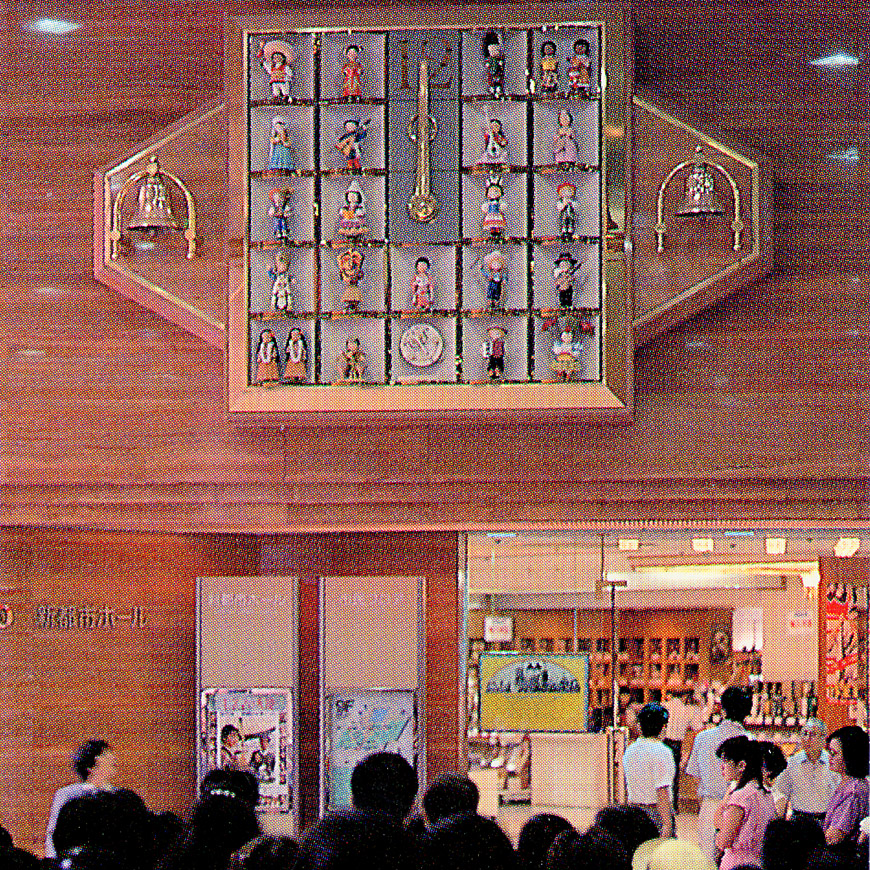
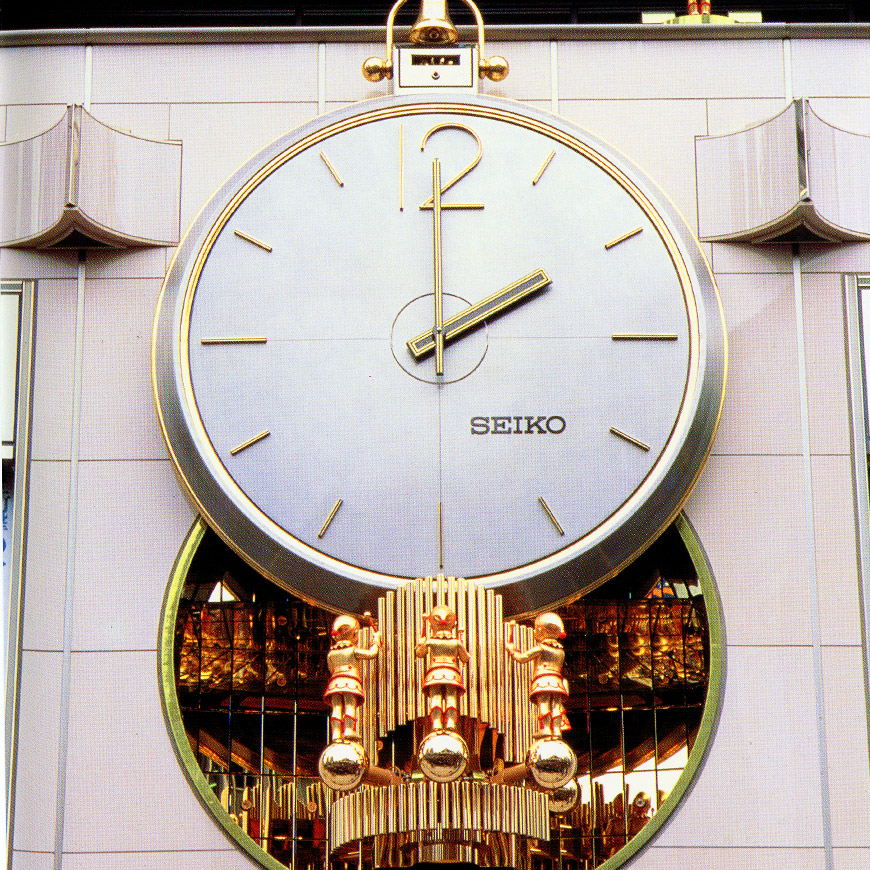
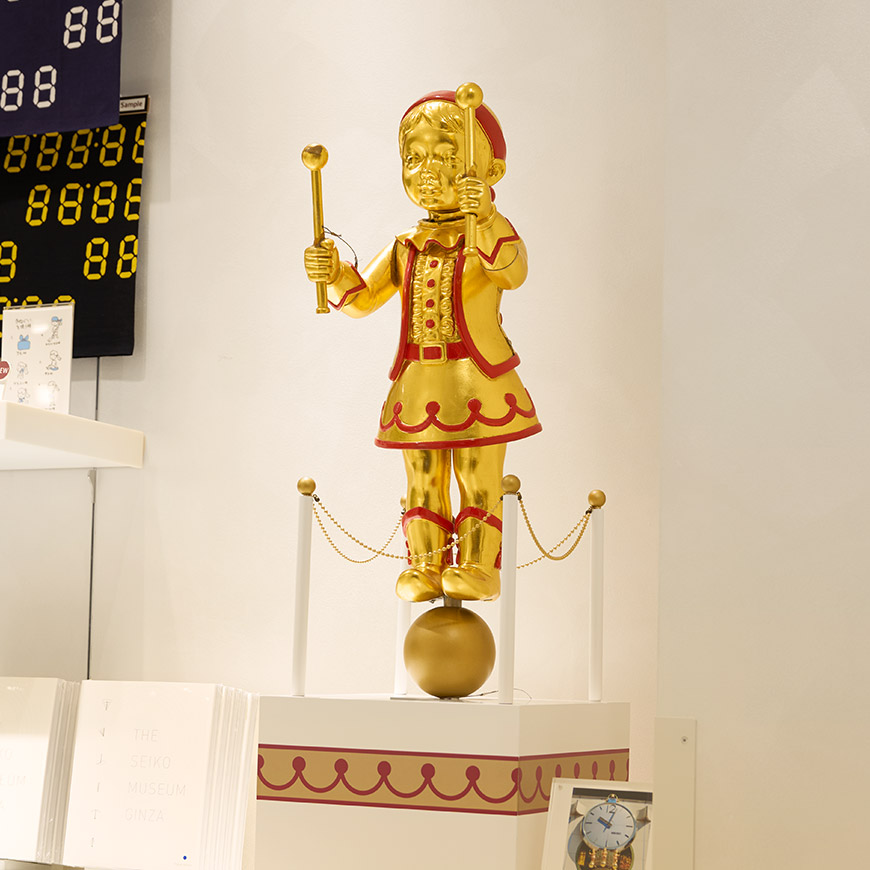
Amid the economic boom of the mid-1980s, large-scale karakuri clocks—musical automaton clocks that went beyond simply telling time—began appearing in shopping complexes and public spaces. At major shopping complexes such as Yurakucho Mullion and Sogo Yokohama, automated figures would come to life accompanied by music every hour on the hour, captivating passersby and transforming time into an experience. Fantasia was born from the desire to bring this sense of excitement closer to everyday life. Reimagining the expressive qualities of large-scale public clocks into a battery-powered wall clock for the home was far more than a matter of simple miniaturization. Every aspect was carefully redesigned—from harmony with interior spaces to the guidance of the viewer’s gaze—in an effort to bring emotionally engaging experiences into daily life.
The Design That Defined the Origins of Home Karakuri Clocks
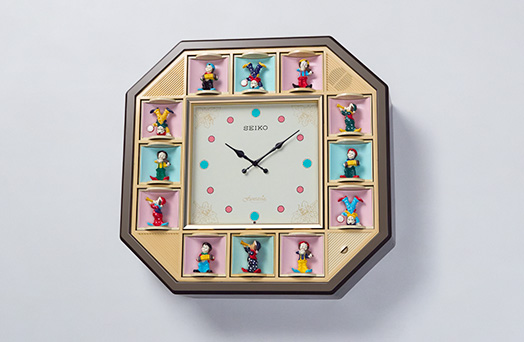
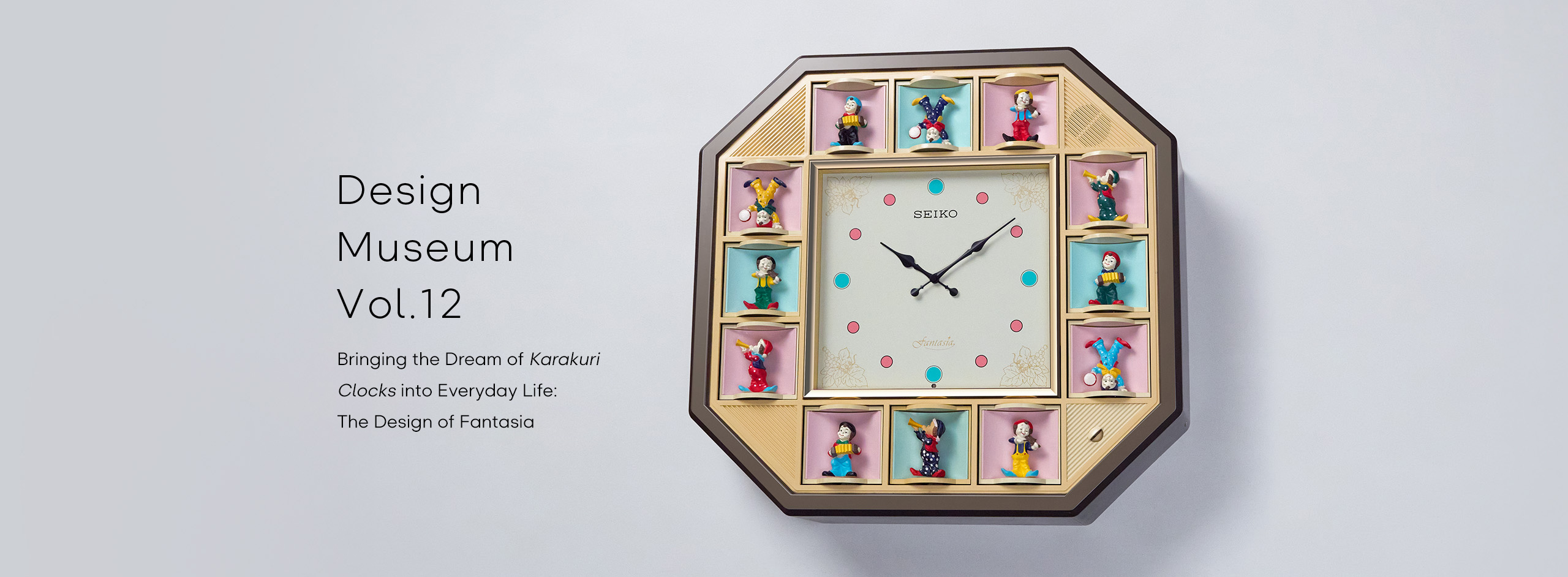
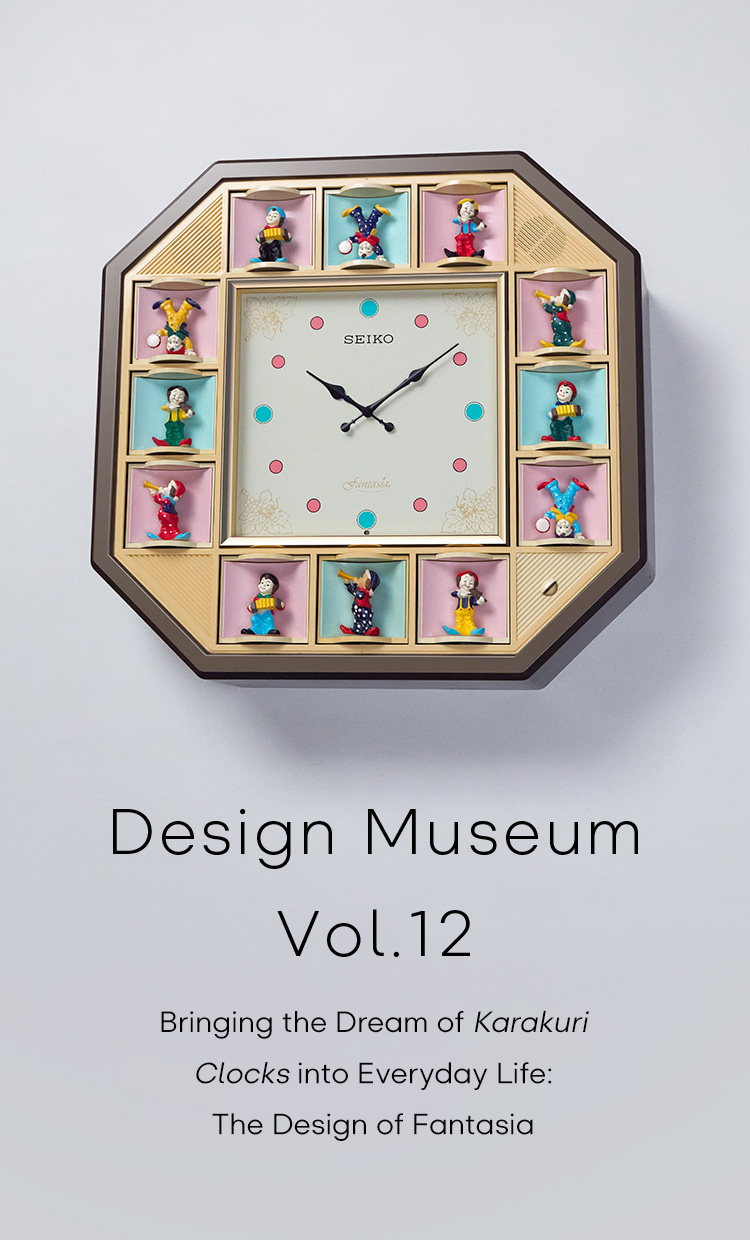
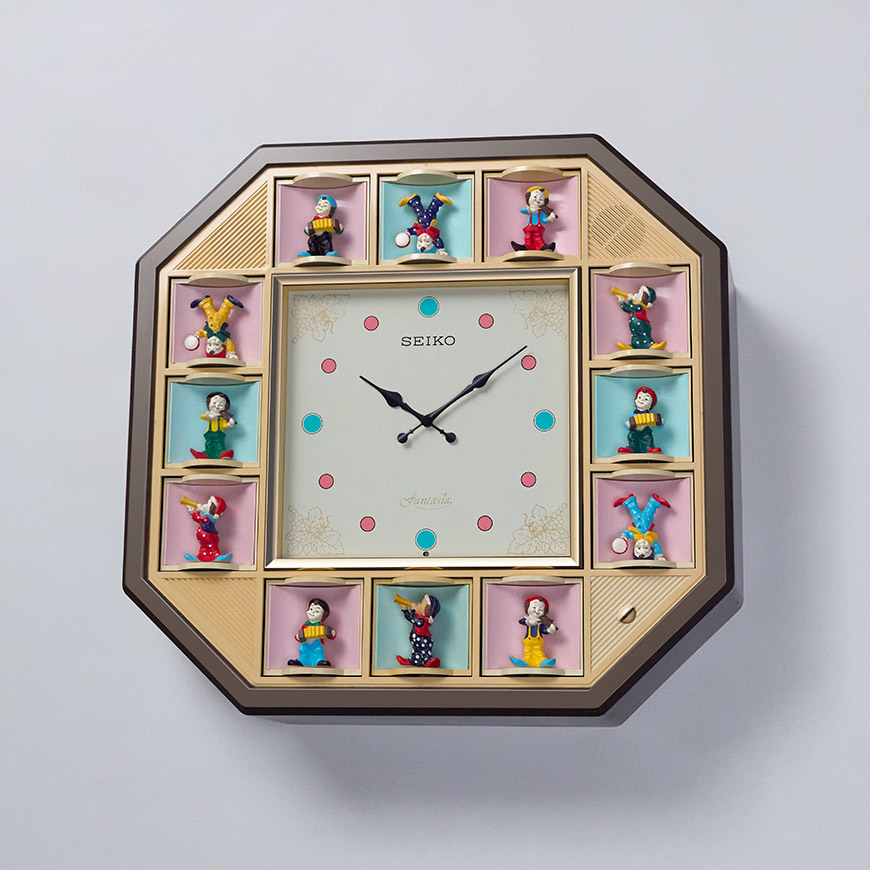
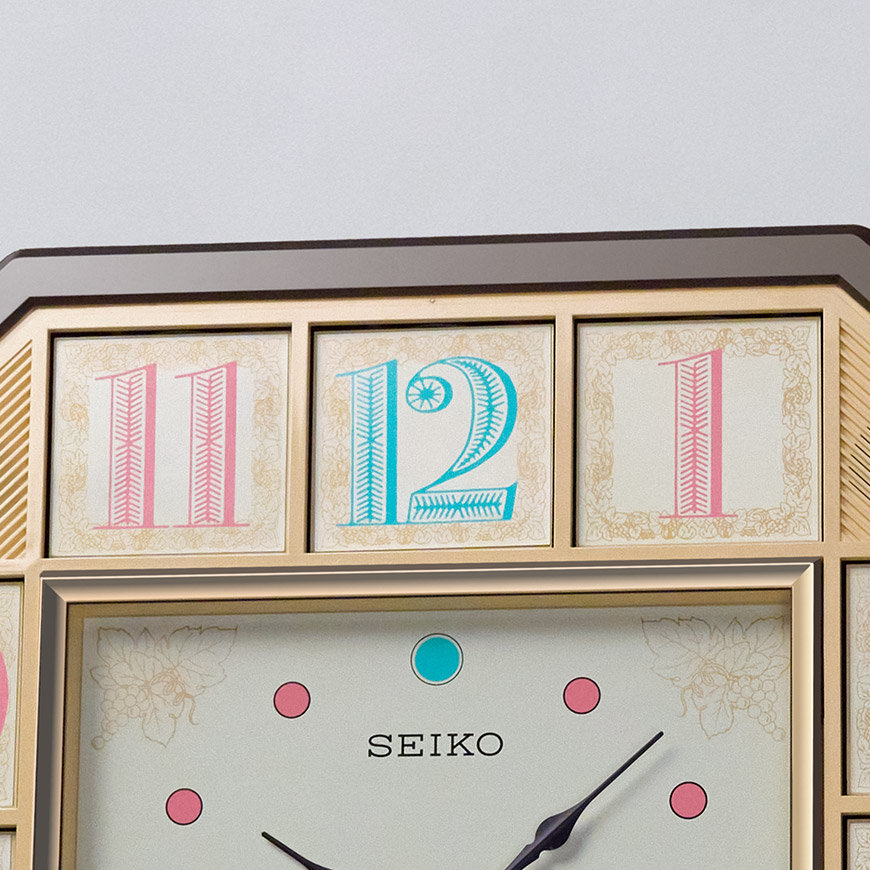
Introduced in 1988, the first-generation Fantasia RE501B laid the foundation for a new category of home karakuri clocks. Inspired by the vision of a fantasy world of puppets moving to music, it featured an enchanting performance in which figures holding musical instruments emerged from 12 doors, bringing surprise and delight to onlookers. In terms of engineering, the team was unwavering in its commitment to ensuring these mechanisms would “always move and always stop” precisely as intended. Alongside the structural design required to support its complex mechanisms, the project also involved pioneering new molding technologies and exploring new avenues of expressive form design to realize its large-scale housing. In pursuing both enjoyment and reliability, Fantasia introduced a new kind of time experience into the home.
A Mechanical Clock Evolved to Be Smaller and Lighter
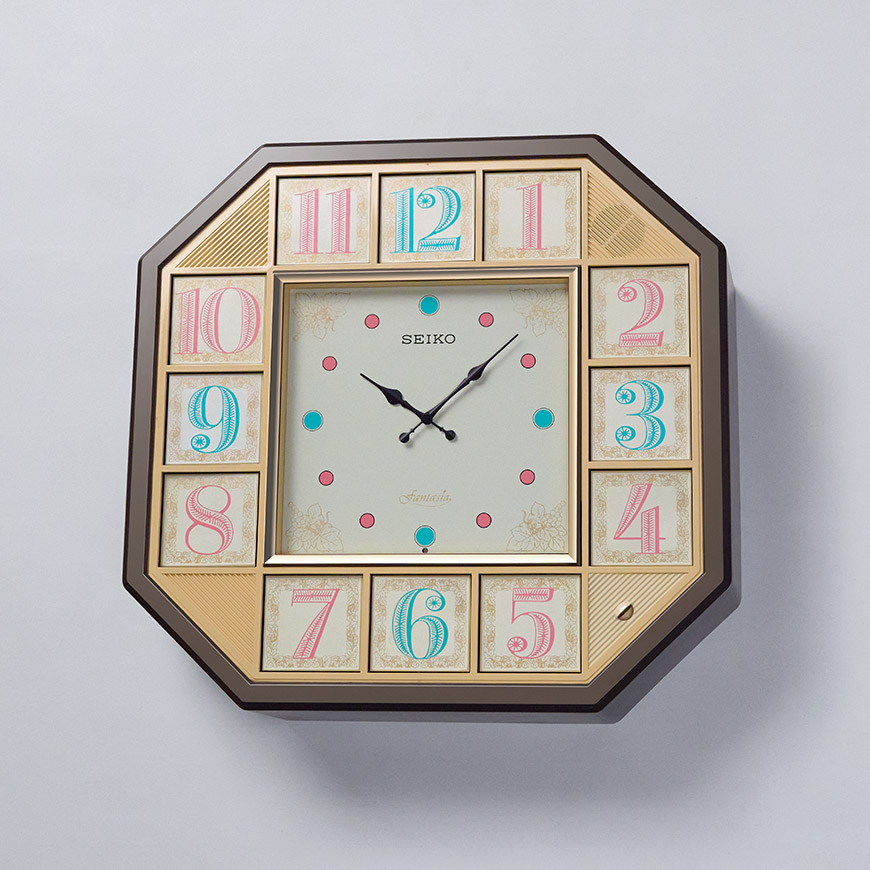
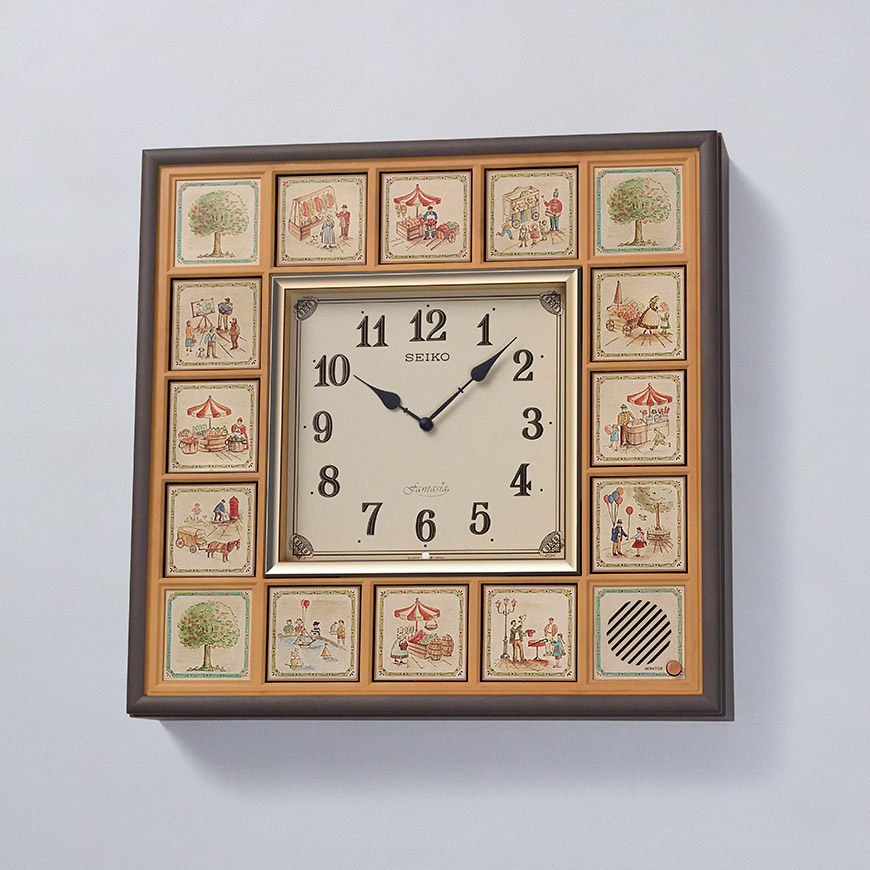
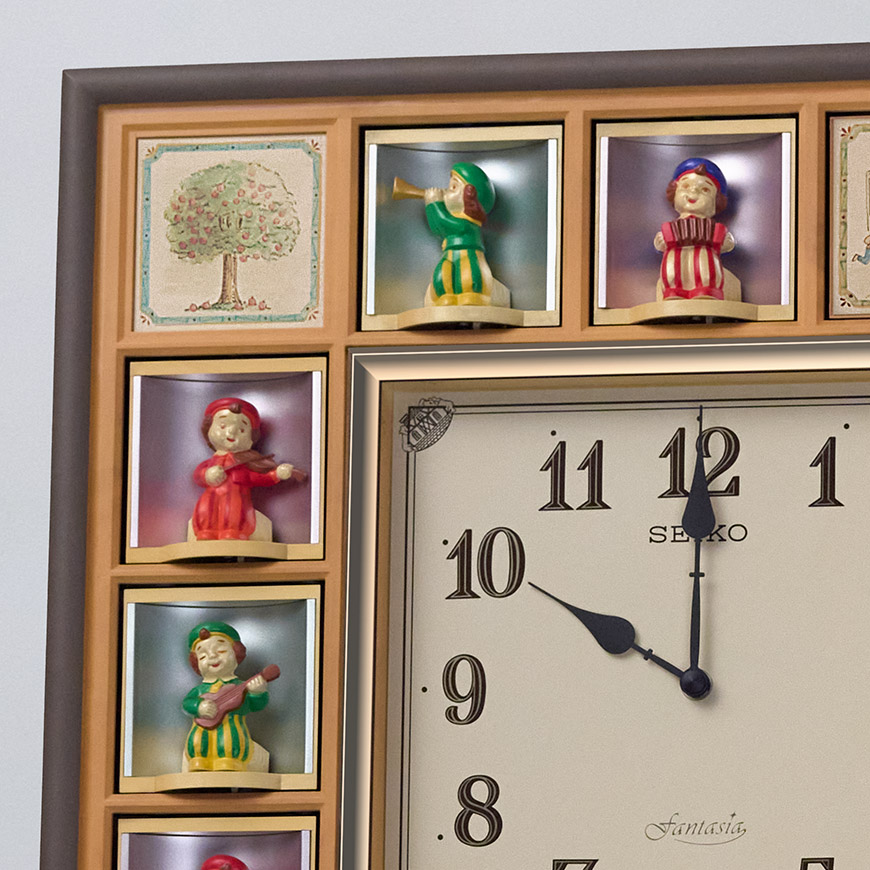
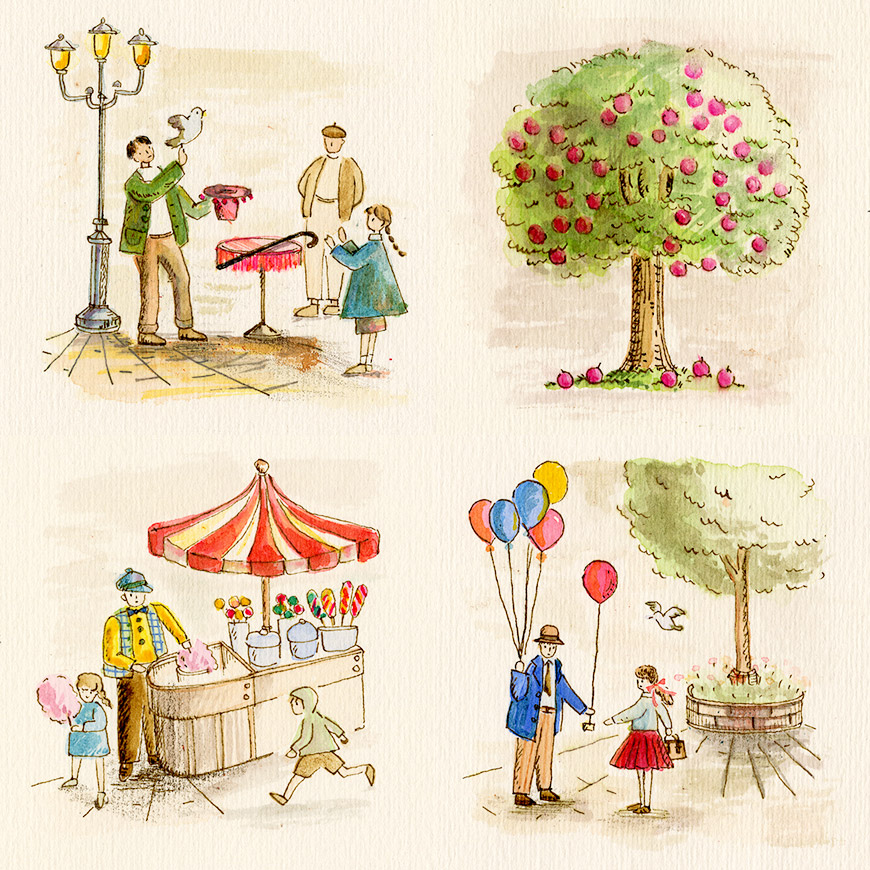
Released the following year in 1989, the RE505B is a model that builds on the philosophy of the original while enhancing practicality. By making the components smaller and lighter, ease of installation and handling were significantly improved. With interior design in mind, the clock was designed with an intentional separation of the outer door panels and the dial, allowing it to be displayed much like a piece of art. The dial features 12 highly visible Arabic numerals. The surrounding door panels feature 13 different illustrations depicting the lively atmosphere of a town, rendered in a soft, picture-book-like style that imbues the entire clock with a sense of narrative.
An Evolved Model Combining Practicality and Delight
The most significant advancement of the RE540M, released in 1998, was its programmable function, which allowed the automated performances to be customized for any time of day. Widely adopted in schools and children’s facilities as an alternative to conventional school bells, the model was designed to create a more lively and enjoyable experience for children. Its design incorporated dynamic features such as opening and closing doors, moving figures, and LED lighting effects. Centered around the theme of a Forest Symphony, the clock evoked the image of a musical performance by whimsical characters, adding a rich sense of narrative to the experience.
Furthermore, shatter-resistant film was applied to the glass, and the musical selections were carefully chosen based on input from childcare workers—all part of a thoughtful design process intended to ensure safe and enjoyable use in environments where many children gather.
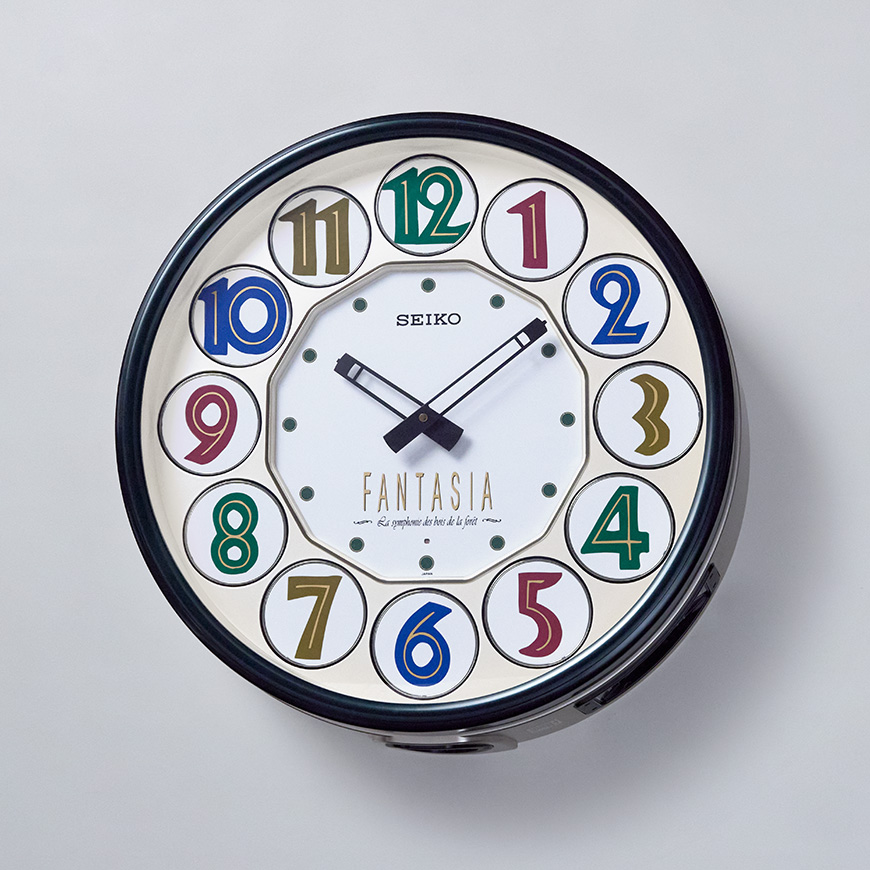
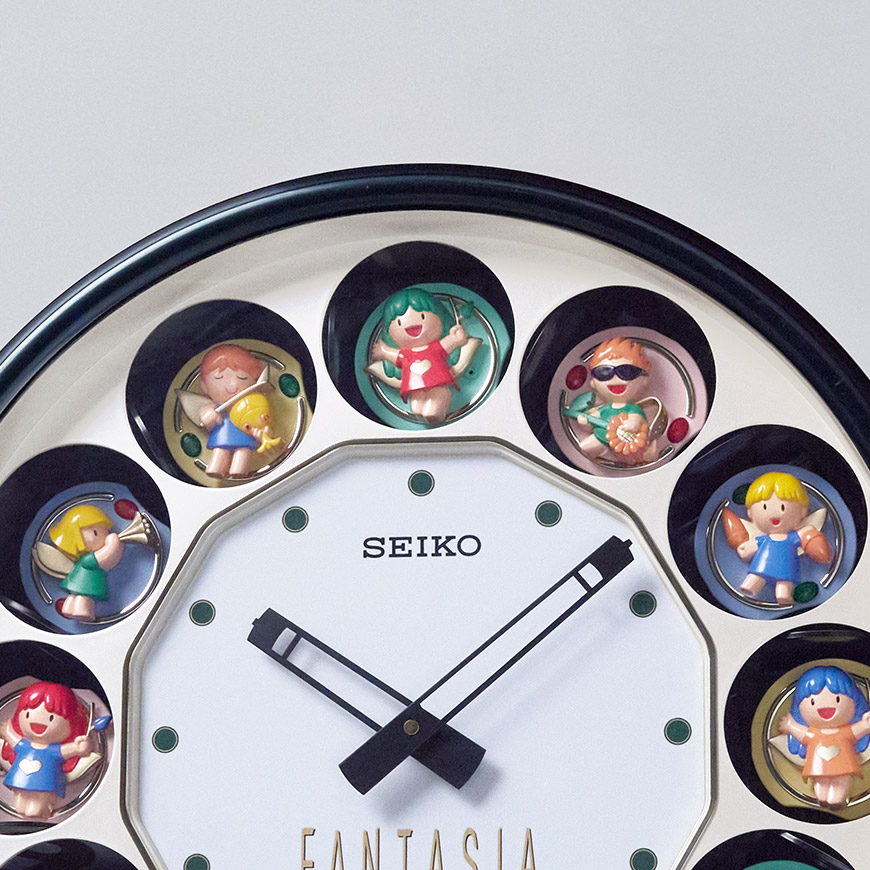
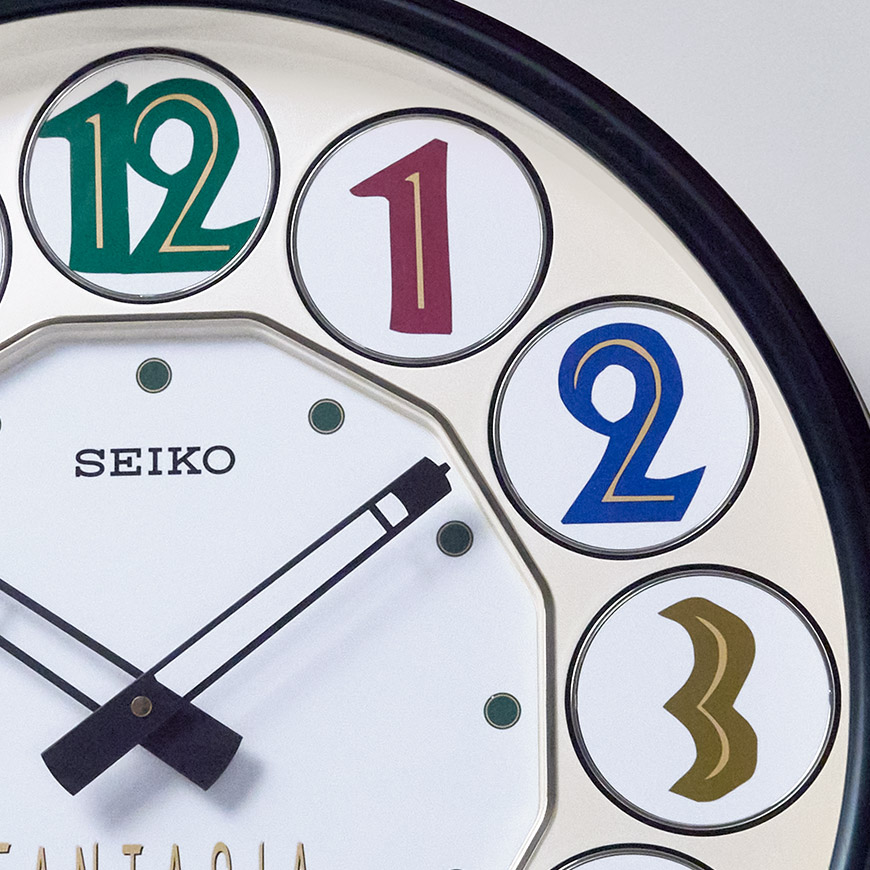
Bringing the wonder of large-scale public clocks into the home and transforming clocks into a medium that creatively expresses time itself, Fantasia consistently pursued the idea of “time as an experience.” This vision was made possible through a technological foundation of energy efficiency, ease of use, and high reliability, combined with the power of design to translate these qualities into human emotion. Pursuing the question of how to create and share excitement, delight, and moments of tranquility within a space—this philosophy continues to live on in Seiko’s modern karakuri clocks.