
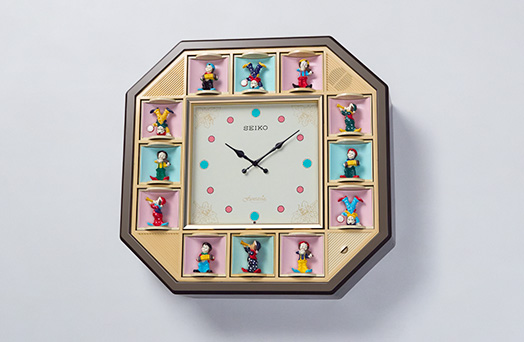
I wanted to address some of the minor inconveniences commonly found with wall clocks.
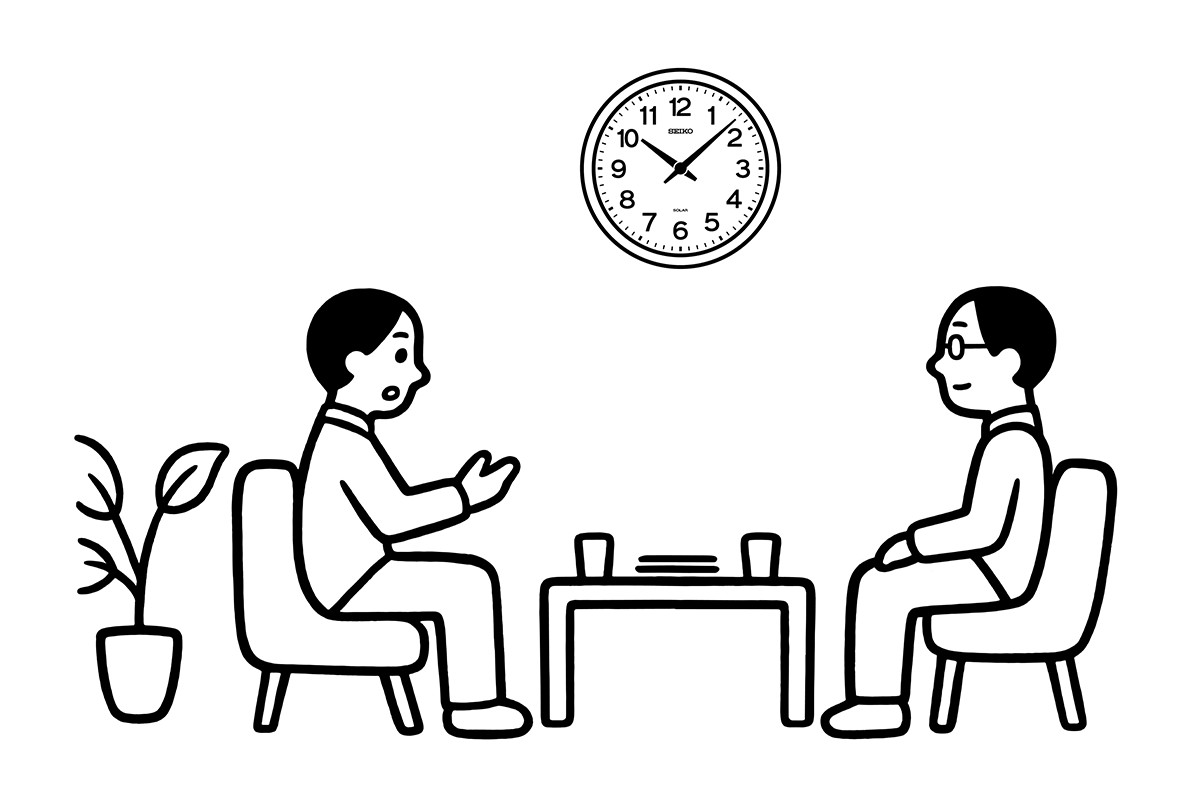
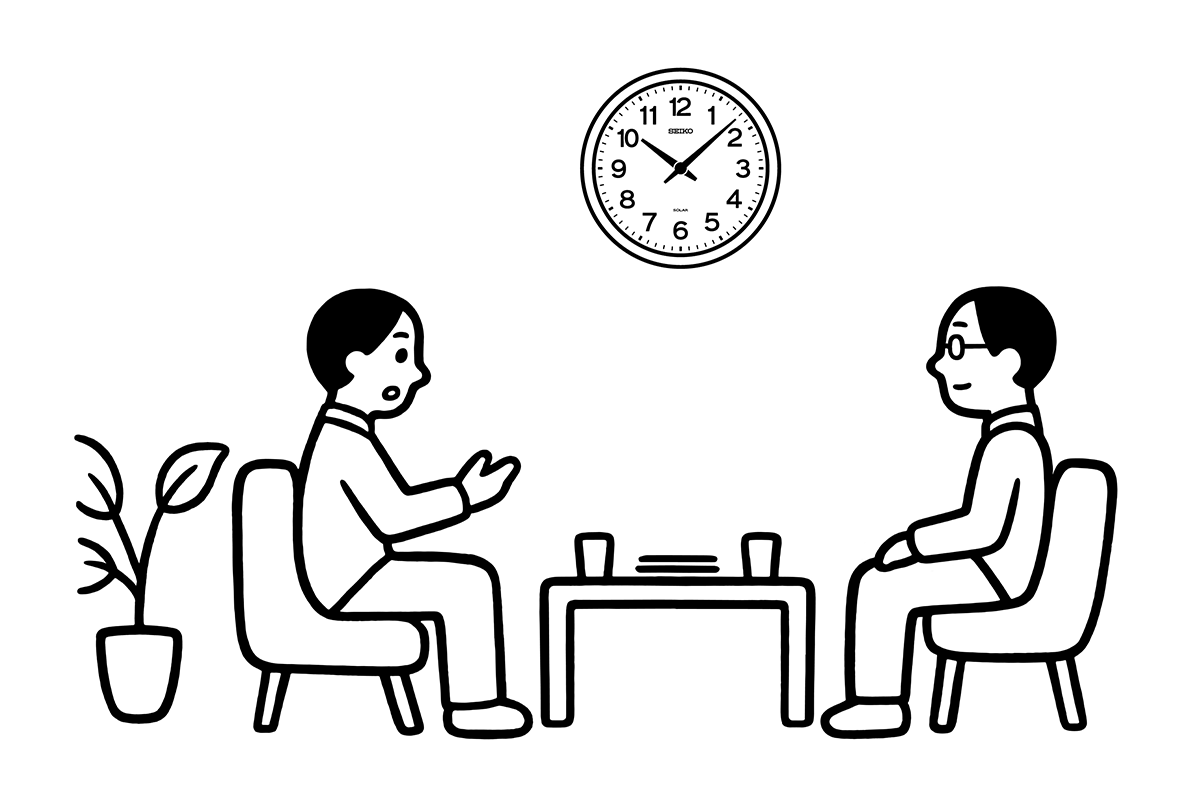
Have you ever noticed how battery-powered wall clocks can begin to lose time ever so slightly or stop without you even realizing it? Unlike watches, wall clocks are typically shared, making it unclear who is responsible for maintaining them. And when it comes time to fix them, their size or placement—often mounted high on a wall—can make the task unexpectedly difficult. As a solution, I set out to design a solar-powered, radio-controlled wall clock that requires neither time adjustment nor battery replacement.
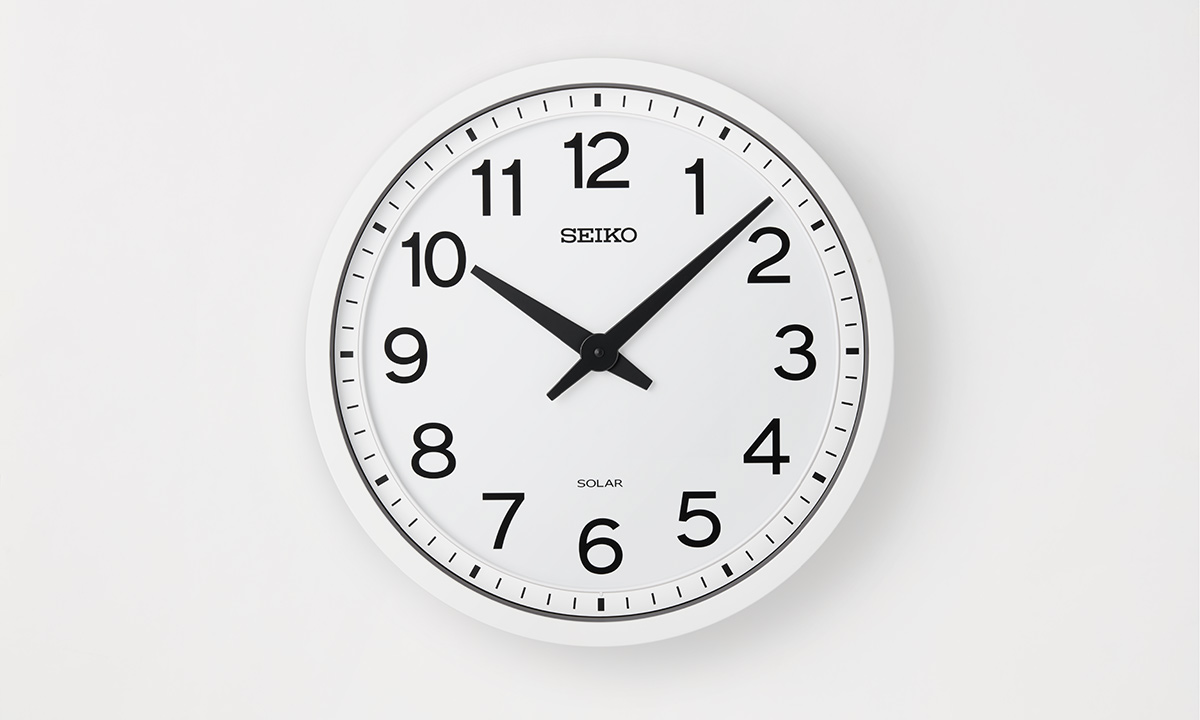
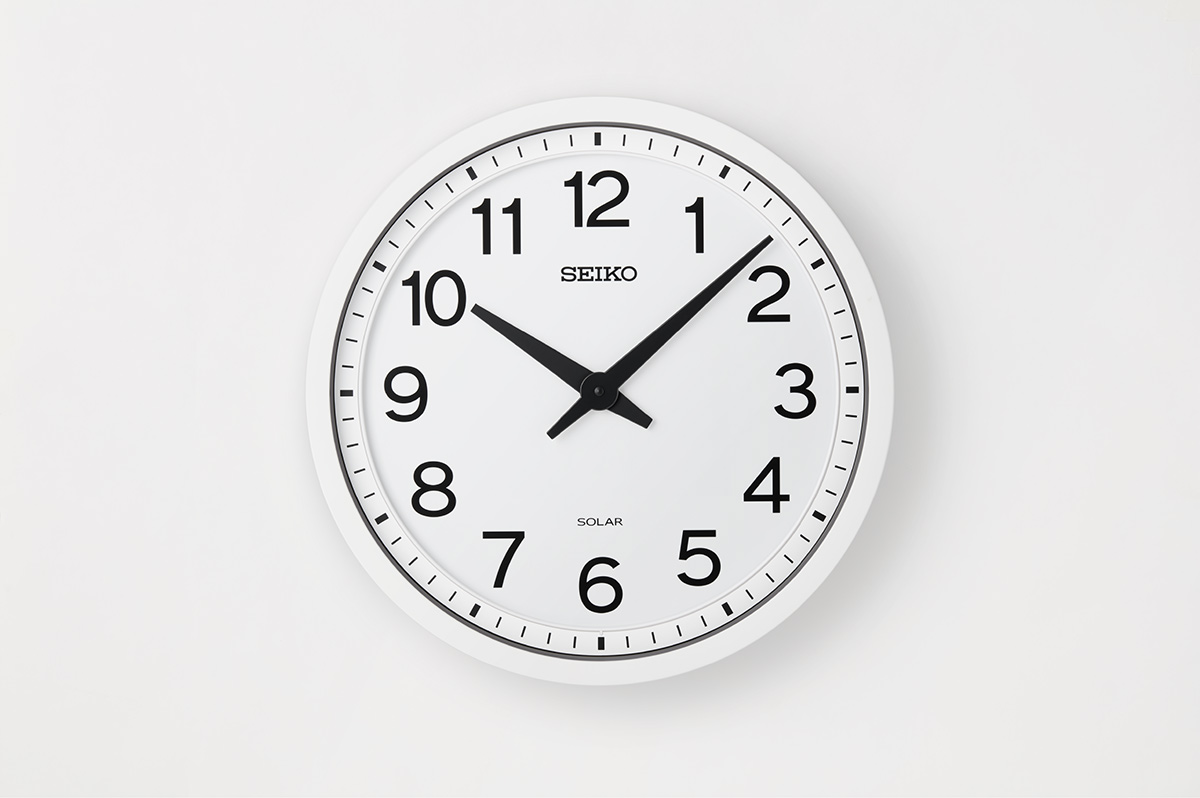
No batteries required. The first fully solar-powered clock.
The greatest challenge was creating a clock powered entirely by solar energy—likely the first of its kind within our company. Most solar clocks include a backup battery to compensate when solar power alone is insufficient. This time, we took a different approach and chose to focus on pure solar operation. The key challenge was solving the question of how to maintain movement of the hands using only light. As this clock was primarily intended for office use, it would rely on fluorescent lighting as its energy source. For this reason, we utilized the highest-performance solar panels available.
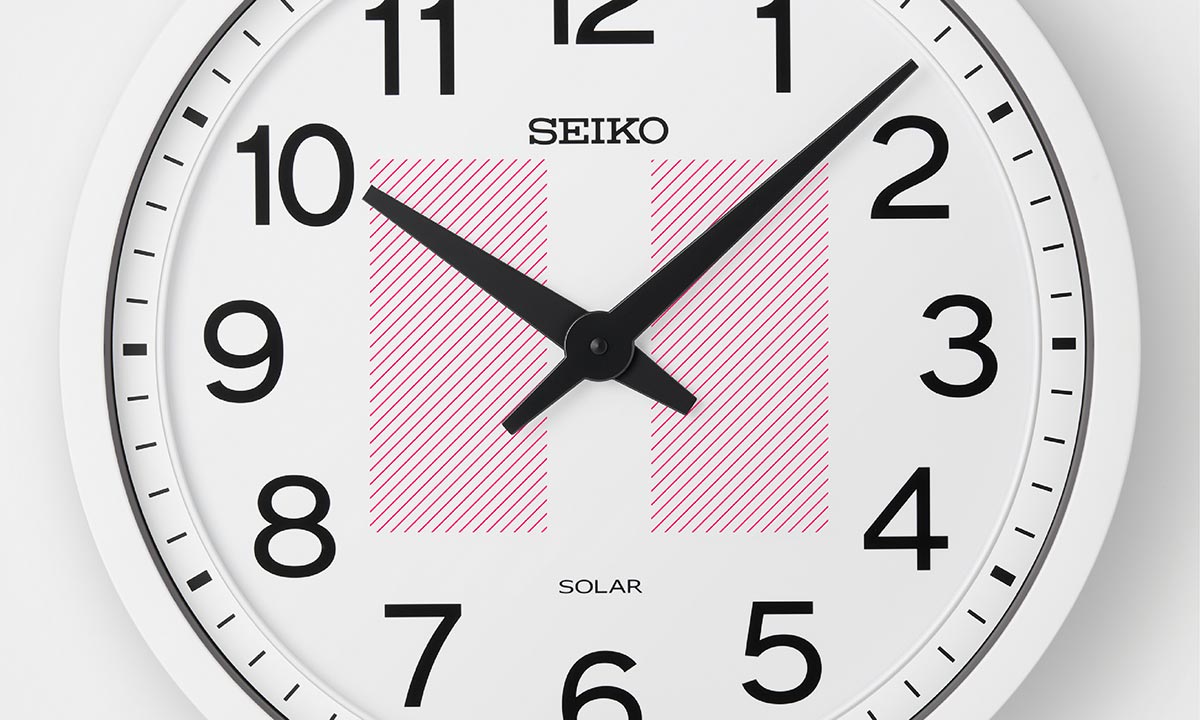
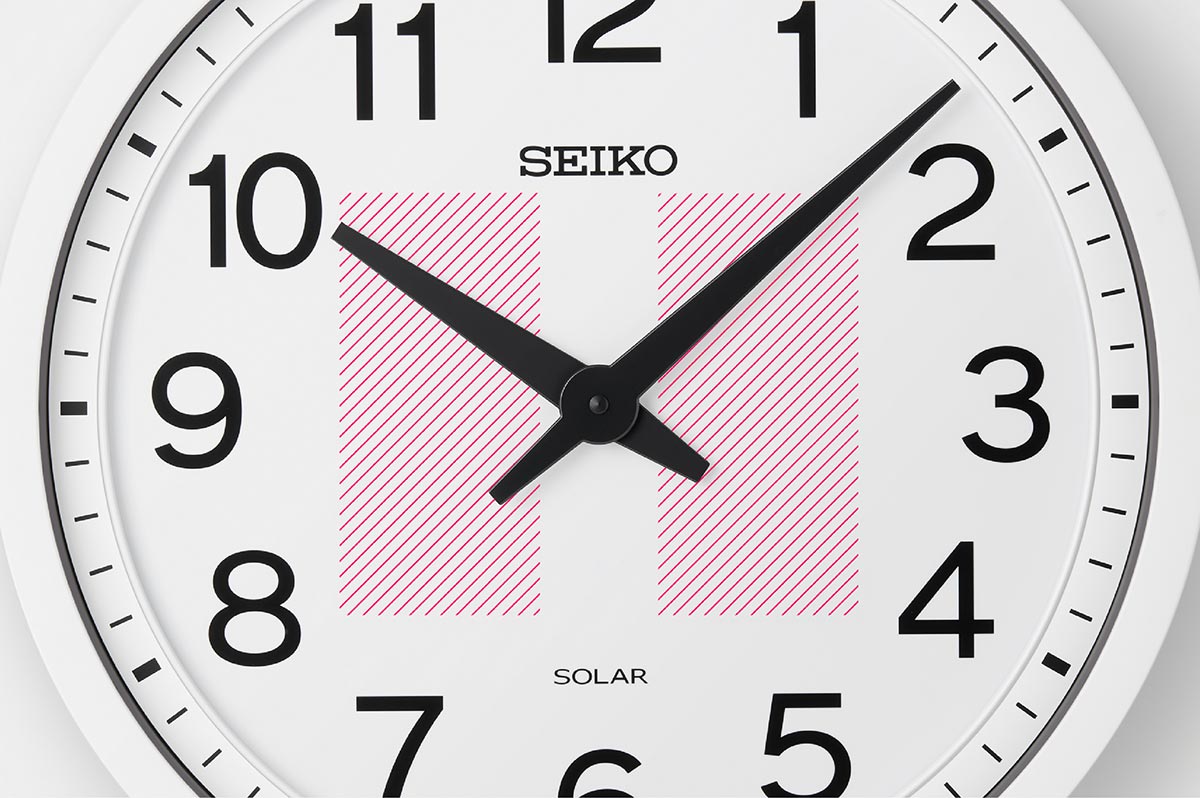
To maximize performance, we also had to avoid any overlap between the solar panels and the numerals. The number “10” posed a particular challenge. Since the panels are located behind the dial, placing the “10” according to standard layout rules would cause the “0” to overlap with the edge of a panel. To resolve this, we made fine adjustments—slightly reducing the size of the numerals and subtly shifting their positions—while maintaining a natural appearance.
We deliberately chose not to include a seconds hand. For office use, we felt that getting a quick and easy read of the approximate time at a glance is more important than knowing the exact second. While the movement of a seconds hand typically serves as proof that a clock is running, in this case its absence conveys a quiet confidence—as if to say, “It won’t stop, so you’re in good hands.”
Familiar rather than new—as if it had always been there.
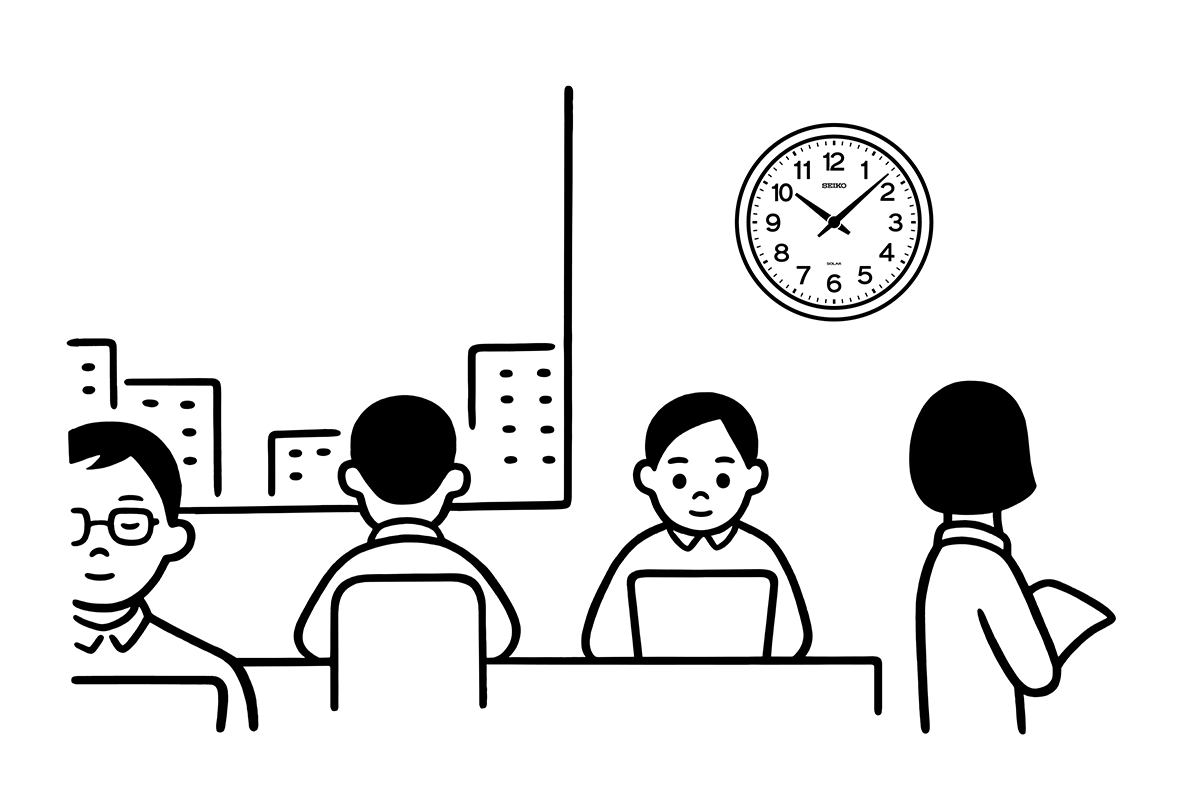
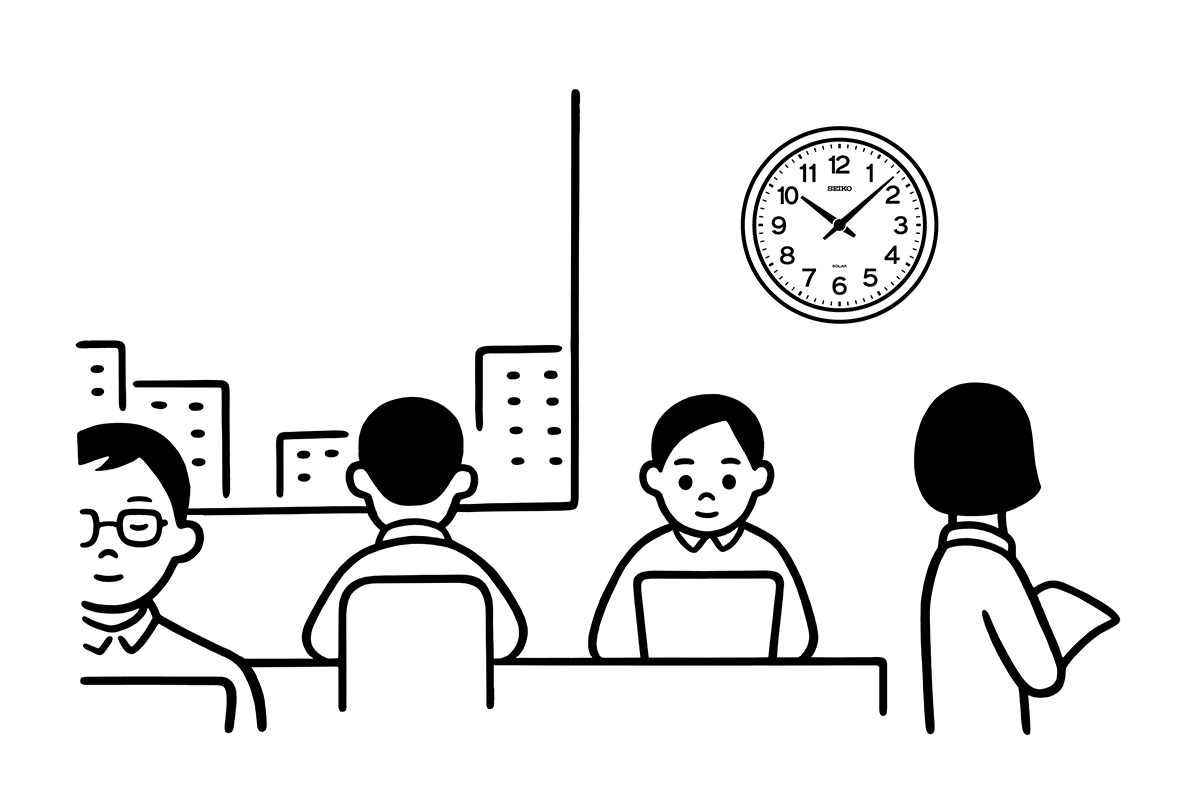
In shaping its appearance, our focus was on creating something approachable to everyone—understated, with a quiet presence. Rather than prompting people to notice, when introduced into an office, we aimed for it to blend in so naturally that they might instead wonder, “Has it always been there?” As something seen almost every day, we felt it should look “ordinary” in the best possible sense.
With this in mind, I also wanted to conceal the solar panels, so I searched for a special dial material that allows light to pass through while remaining opaque from a distance.
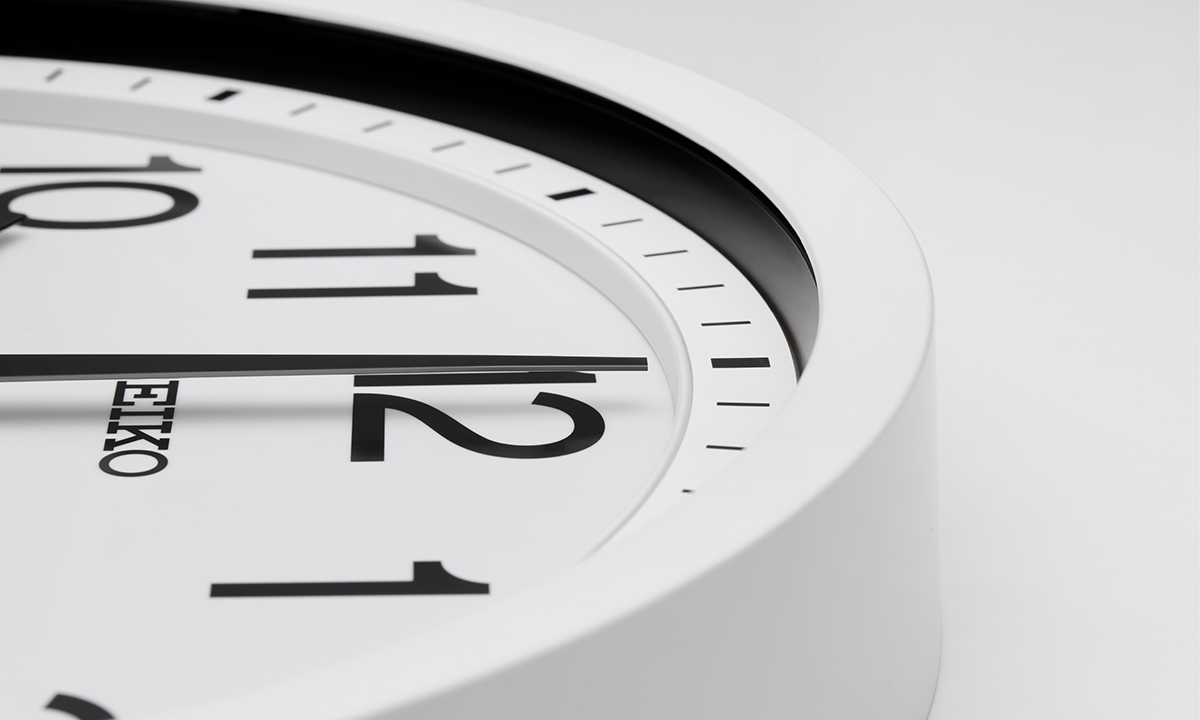
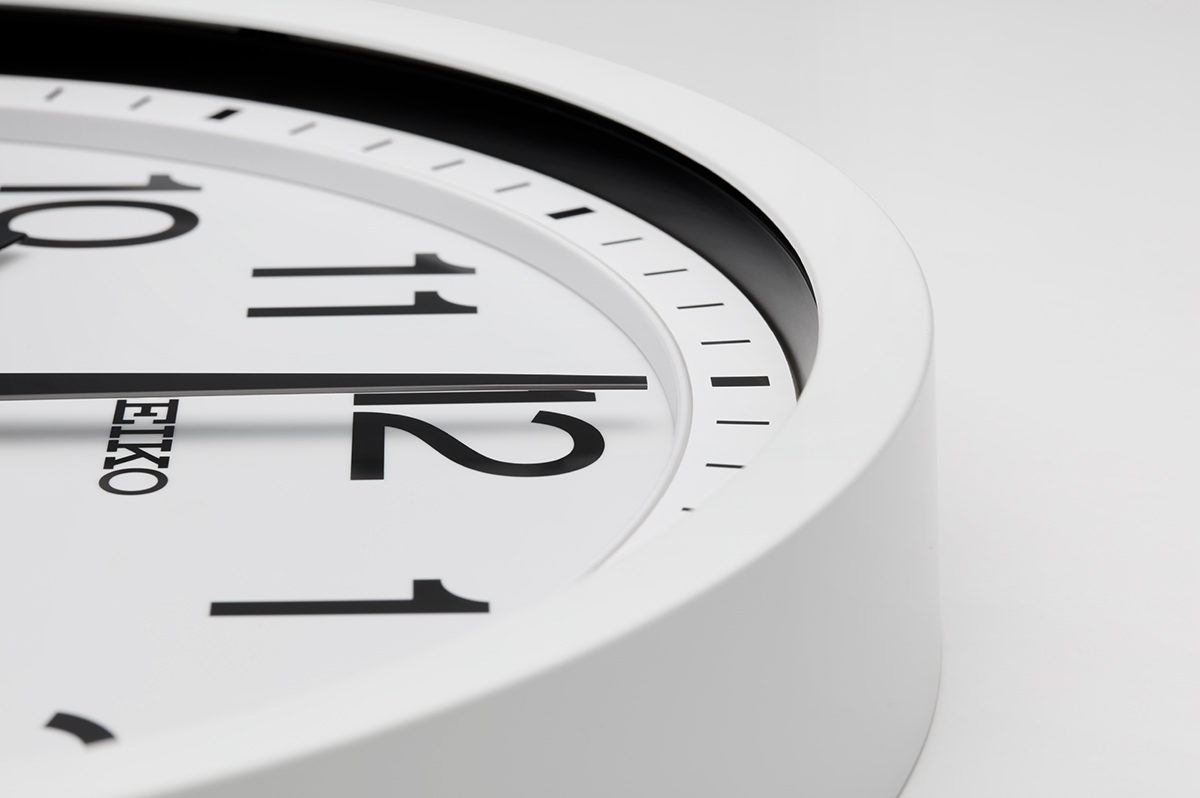
For the numerals, I selected a universal typeface—unassuming and “ordinary” in the best sense. As for the frame color, pure white would make it appear too new and, depending on the space, could cause it to stand out. Instead, I employed a gray base to achieve a more natural white. Also, considering readability to be a form of approachability, I took care to align the height of the hands and the markers to ensure that the time can be read accurately from any angle.
To create something ordinary, you can’t simply be ordinary.
This clock was honored with the 2025 Good Design Award. Our goal of resolving the minor inconveniences and frustrations associated with clocks led to the development of a battery-free, solar-powered timepiece. As a result, we were able to deliver an environmentally friendly product that produces no battery waste and has a long lifespan, thereby also contributing to solving broader social issues. I believe the award recognized this contribution.
During the process of trial and error, a comment from my supervisor provided a key insight. When I had become overly focused on creating a sense of familiarity—as if it had always been there—he offered an unexpected suggestion: “Why not outline the inside of the frame in black?” When I gave it a try, the design—which up to then had appeared too neatly composed—not only immediately drew the eye to the dial, it also created a more natural impression.
Through this experience, I came to realize that behind things that appear “ordinary”—not only clocks but many other things also—lie the extraordinary ingenuity and effort of designers and engineers. Ordinary is amazing. This is something I want to keep in mind as I continue to design clocks.

Wakamatsu joined Seiko in 2022 and is currently responsible for designing clocks for both Japanese and international markets. People often describe her as “calm and composed,” though she herself considers that as simply “ordinary.”

Wakamatsu joined Seiko in 2022 and is currently responsible for designing clocks for both Japanese and international markets. People often describe her as “calm and composed,” though she herself considers that as simply “ordinary.”
Note: This product is currently available only in Japan.